Propagation
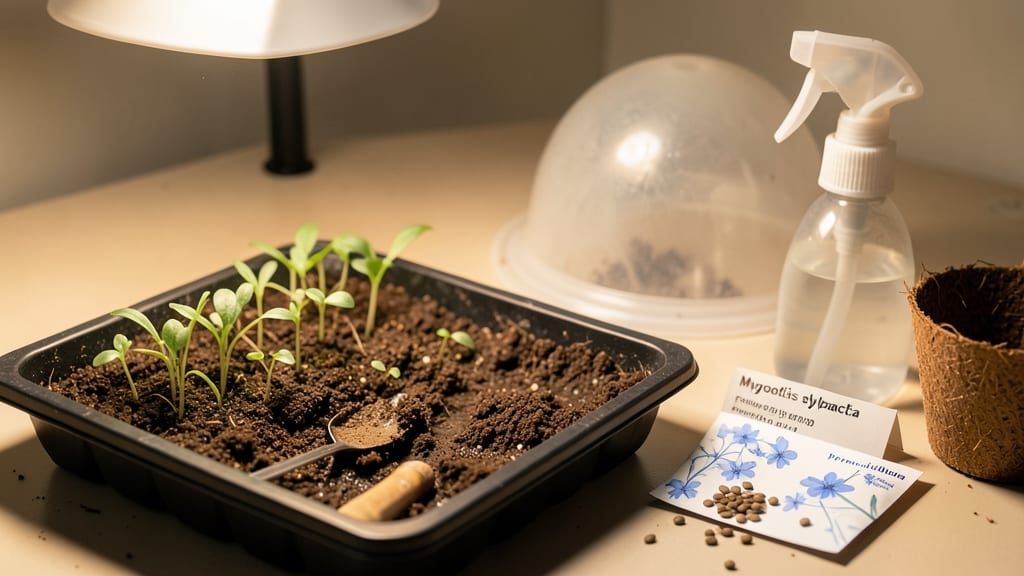
Growing forget-me-nots from seed indoors is like unlocking a secret garden of delicate blue blooms—60 days of patience turns tiny seeds into cold-hardy flowers that thrive even when planted outside. 🌱 I’ve grown forget-me-nots for years, and the key to success starts with the right soil temperature and light trick: these seeds need a cold shock to germinate, but indoor setups can mimic it with a simple fridge hack.
The process is simpler than it sounds: grab a shallow tray, some seed-starting mix, and a spray bottle—no fancy equipment needed. Forget-me-not seeds are tiny, so scatter them lightly on damp soil and press them in gently.
A clear plastic dome or plastic wrap keeps humidity high until those first sprouts appear, usually within 10-14 days if you’ve given them the cold treatment. Once they’re up, bright light becomes critical.
Forget-me-nots crave 12-14 hours of light daily, so a grow light or sunny windowsill is a must. They’ll grow fast—2-3 inches tall in just 3 weeks—and develop those signature fuzzy leaves. Just watch for damping-off (a fungal menace) by keeping the soil moist but not soggy.
By day 60, you’ll have sturdy seedlings ready for transplanting outdoors after the last frost. The payoff? Clusters of vibrant blue, pink, or white blooms that last all summer, perfect for cottage gardens or cutting. Here’s how to do it right from the start.
📚 In This Guide
- What you need
- Instructions
- Tips and common mistakes
- Wrapping up and next steps
What you need
- ● Forget-me-not seeds: Choose Myosotis sylvatica (woodland forget-me-not) or Myosotis alpestris (alpine forget-me-not). Aim for 10–20 seeds per container to ensure a full display.
- ● Seed-starting mix: A lightweight, sterile potting mix (e.g., Pro-Mix or Black Gold Seedling Mix) with perlite or vermiculite (20–30% by volume) for drainage.
- ● Containers: Cell trays (72-cell or larger) or
- ● Small pots (2–3 inches deep) with drainage holes.
- ● Grow lights or sunny windowsill: A full-spectrum LED grow light (12–16 hours/day) or a south-facing window (6+ hours of sunlight).
- ● Spray bottle: For gentle watering (16 oz. capacity with a fine mist nozzle).
- ○ Clear plastic dome or plastic wrap: To retain humidity (optional but helpful for germination).
- ● Small hand trowel or spoon: For sowing tiny seeds (a ½-inch spreader works well).
- ○ Heat mat (optional): Set to 65–70°F to speed up germination (forgo if your home stays warm).
- ● Fertilizer: A balanced liquid fertilizer (5-5-5 or 10-10-10) diluted to ½ strength for seedlings (use after 3–4 weeks).
- ● Labeling tags: To track seed varieties and planting dates.
- ● Humidity tray (DIY): A shallow tray with pebbles + water to boost moisture (great for cold-stressed seeds!).
- ● Patience: Forget-me-not seeds are slow to germinate (4–8 weeks at 50–60°F).
- ○ Cold stratification (optional but recommended): Chill seeds in the fridge for 2–4 weeks in a damp paper towel to mimic winter.
- ● Space: Ensure your setup has room for seedlings to grow 4–6 inches tall before transplanting.
Step-by-Step instructions for growing forget-me-nots indoors
Here's how to coax those delicate blue blooms indoors with minimal fuss—no cold frames needed.
🌱 Step 1: Start Seeds in Moistened Soil Mix
Fill small seed trays with sterile seed-starting mix and moisten it until damp but not soggy. Forget-me-not seeds need light to germinate, so don't bury them—they're tiny and need just a sprinkle of soil on top. Press them gently into the surface with your fingertip, spacing them about ¼ inch apart.
Cover the tray with plastic wrap to retain moisture and warmth. Place it in a bright spot that stays between 60-65°F. You'll see sprouts in 14-21 days, but don't rush germination by overwatering—just mist the soil occasionally to keep it lightly damp. Patience here prevents moldy seeds.
☀️ Step 2: Provide Bright, Indirect Light Immediately
The instant seedlings emerge, move them to the brightest window you have—south-facing is ideal. Forget-me-nots need 10-12 hours of light daily, and without enough, they'll stretch toward the window with weak, leggy stems. If your windows aren't bright enough, supplement with a grow light positioned 4-6 inches above the seedlings.
Rotate the tray a quarter turn daily so plants grow straight instead of leaning. You'll notice strong seedlings have deep green leaves and compact spacing between them. If leaves turn pale or stems stretch excessively, your light source is too far away.
💧 Step 3: Water Gently and Thin Seedlings
Water from the bottom by placing the tray in ½ inch of water for 10 minutes, then let excess drain away. This prevents soil from splashing onto delicate seedlings, which can cause rot. Forget-me-nots hate soggy roots, so always let the top ½ inch of soil dry slightly between waterings.
When seedlings have 2-3 sets of true leaves (about 4-6 weeks after sowing), thin them to 2 inches apart. Use small scissors to snip unwanted seedlings at soil level—don't pull them, or you'll disturb the roots of the ones you're keeping.
⏰ Step 4: Harden Off and Transplant Outdoors
Two weeks before your last frost date, begin hardening off seedlings by placing them outside in a shaded, sheltered spot for 1-2 hours the first day. Gradually increase their outdoor time over 7-10 days, ending with a full day in direct sun. This slow adjustment prevents transplant shock.
Plant seedlings 6-8 inches apart in a spot with partial shade to full sun. Forget-me-nots love cool weather and will bolt (go to flower) if stressed by heat. Water deeply after transplanting to settle the roots, then keep soil consistently moist but not waterlogged. You'll see blooms in 60-70 days from sowing.
🌿 Step 5: Maintain Cool, Moist Conditions
Once planted, forget-me-nots thrive in cool temperatures—ideal conditions are 55-70°F. Mulch around plants with 1 inch of compost to retain moisture and regulate soil temperature. Deadhead spent blooms regularly to encourage more flowers, but leave some seed heads if you want next year's crop.
These plants are surprisingly low-maintenance once established. Just watch for powdery mildew in humid conditions—space plants properly and water at the base to prevent fungal issues. With proper care, your forget-me-nots will reward you with delicate blue blooms from early summer through fall.
Tips & tricks for perfect indoor forget-me-nots
These little tricks will help you avoid common pitfalls and give your forget-me-nots the best start possible.
Light Source Strategy: Forget-me-nots need that 10-12 hours of light daily—if your windows aren't bright enough, a simple LED grow light on a timer solves the problem. Position it 4-6 inches above the seedlings and set it for 12 hours to mimic natural daylight cycles. I've seen weak seedlings transform in just a few days with proper light exposure.
Temperature Matters: Those 60-65°F temperatures in Step 1 aren't just suggestions—they're critical for germination. If your home runs cooler, place the seed tray on top of your fridge (not inside) to create a warm microclimate. Avoid direct heat sources like radiators, which can dry out the soil too quickly and prevent sprouting.
Thinning Technique: When you're thinning to 2 inches apart in Step 3, use sharp scissors to cut seedlings at soil level rather than pulling them. This prevents disturbing the roots of your kept plants. I learned this the hard way when my first batch got tangled during thinning—now I always use clean scissors and work methodically from one side to the other.
Harden Off Gradually: The 1-2 hours to full day transition in Step 4 is where many beginners rush. Start with just 30 minutes on day one if you're worried about shock. Watch for wilting—if leaves droop, bring them back inside immediately. This slow introduction prevents transplant shock that can kill seedlings.
Pro Tips for Grow Forget Me Nots From Seed Indoors
- These little tricks will help you avoid common pitfalls and give your forget-me-nots the best start possible.
- Light Source Strategy: Forget-me-nots need that 10-12 hours of light daily—if your windows aren't bright enough, a simple LED grow light on a timer solves the problem.
- Temperature Matters: Those 60-65°F temperatures in Step 1 aren't just suggestions—they're critical for germination.
Frequently asked questions
Got questions about growing forget-me-nots from seed indoors?
You’re not alone! Here are answers to the most common concerns—so you can nurture those delicate blue blooms with confidence.
How long does it take for forget-me-not seeds to germinate?
Patience is key! Forget-me-not seeds typically take 2 to 4 weeks to germinate when kept in consistent moisture and warmth (around 60–65°F). Cold stratification (chilling seeds for 4–6 weeks) can speed this up—just mimic winter’s touch before sowing.
Can I grow forget-me-nots indoors year-round?
While possible, these cool-loving plants thrive best with a winter chill (40–50°F for 6–8 weeks) before blooming. If growing indoors year-round, supplement with a grow light (12–14 hours/day) and keep temps below 70°F to prevent leggy growth.
What if my forget-me-not seedlings look weak or yellow?
Weak or yellow seedlings often signal overwatering, poor drainage, or damping off (a fungal issue). Let the soil dry slightly between waterings, use a sterile seed mix, and ensure pots have drainage holes. If damping off occurs, treat with a fungicide or cinnamon sprinkle.
Are there faster-growing alternatives to forget-me-nots?
If you’re short on time, try annual borage (germinates in 7–10 days) or cornflower (blooms in 60–70 days). For perennials, lobelia or myosotis (a close forget-me-not relative) are great substitutes—but none match the charm of true forget-me-nots!
Do forget-me-nots need full sun indoors?
Nope! These shade-tolerant beauties prefer bright, indirect light (like an east-facing window). Direct sun can scorch leaves, while too little light leads to sparse blooms. A grow light 6–8 inches above seedlings works wonders if natural light is lacking.
Wrapping up and next steps
Growing forget-me-nots from seed indoors is a rewarding journey that brings delicate blue blooms to your home in just 60 days! With the right light, temperature, and patience, you’ll nurture these charming flowers from tiny seeds to vibrant plants.
Once you’ve mastered the process, why not expand your indoor garden with other cold-loving flowers like pansies or sweet alyssum?
🌱 Ready to take the next step? Share your progress with fellow gardeners or experiment with transplanting your seedlings outdoors once the last frost has passed. Happy growing—your windowsill will thank you! 💙