Size
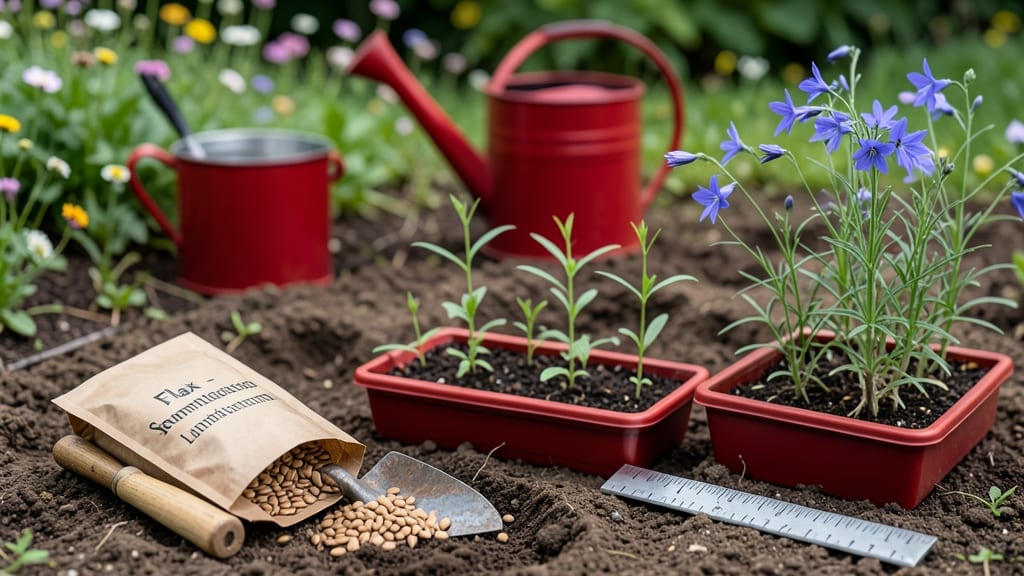
Growing flax seed plants from seed to harvest in just 60 days feels like magic—especially when you realize how tough these plants are. 🌱 I’ve grown flax in everything from heavy clay soil to sandy loam, and they thrive when given the right cold start.
The key isn’t just patience; it’s understanding how flax wants to grow—fast, upright, and with those signature sky-blue blooms that hummingbirds adore.
The secret to success begins with cool soil—flax hates heat when germinating, which is why early spring or fall planting works best. You’ll need well-draining soil (even sandy mixes work), minimal fertilizer (too much nitrogen stunts those tall stems), and consistent moisture—not soggy, just damp.
Once established, flax plants are drought-tolerant, but they’ll reward you with stronger stems and more seed pods if you keep them evenly watered until flowering.
By harvest time, you’ll have 6-foot-tall stalks packed with fluffy seed heads—perfect for bird feeders, linen fiber, or even baking. The plants self-seed aggressively, so one season turns into a permanent border.
Just be warned: flax is not a fussy plant, but it does need space (12–18 inches apart) to avoid crowding, which weakens stems and reduces seed yield.
Whether you’re growing flax for ornamental appeal, fiber, or seed, the payoff is worth the minimal effort. Start seeds indoors 4–6 weeks before the last frost, and you’ll have blooms by late spring—just in time to catch the first wave of pollinators.
Here’s how to get it right the first time.
📚 In This Guide
- What you need
- Instructions
- Tips and common mistakes
- Wrapping up and next steps
What you need
- ● Flax seeds: 1–2 lbs (organic, untreated for best results). Pro tip: Look for Linum usitatissimum varieties like ‘Storm’ or ‘Odin’ for cold tolerance!
- ● Growing containers: 6–12" deep pots (if starting indoors) or a well-prepped garden bed (6–8" deep, loose soil).
- ● Potting mix: Lightweight, well-draining mix (e.g., 50% peat moss + 50% perlite or a seed-starting blend).
- ● Compost or fertilizer: Balanced organic fertilizer (e.g., 10-10-10) or worm castings for nutrient boost.
- ● Watering can or spray bottle: For gentle hydration (flax hates soggy soil!).
- ○ Grow lights (optional): LED or fluorescent lights (12–16 hrs/day) if starting indoors before last frost.
- ● Hand trowel or planting stick: For sowing seeds at ¼" depth.
- ● Garden twine or stakes: To support tall varieties (up to 4 ft!) as they grow.
- ● Mulch (straw or grass clippings): To retain moisture and suppress weeds.
- ● Pruners or scissors: For harvesting seed pods (sterilize with rubbing alcohol!).
- ○ pH test kit (optional): Aim for 6.0–7.0—flax prefers slightly acidic to neutral soil.
- ● Sunlight: Full sun (6+ hrs/day)—flax thrives in cool, bright conditions!
- ● Temperature: Cool-season crop—ideal germination at 50–70°F; avoid planting when soil temps exceed 80°F.
- ● Spacing: 6–12" apart in rows 18" apart (thin seedlings to avoid overcrowding).
- ● Patience: From seed to harvest? 60–90 days (varies by variety!).
Step-by-Step guide to cultivating flax seed plants
Flax thrives in cool weather, and with these precise steps, you'll have vibrant blooms ready for harvest in just two months.
🌱 Step 1: Select and Prepare the Planting Site
Flax prefers well-draining soil with a pH between 6.0 and 7.5. Work in 2-3 inches of compost or aged manure into the top 6 inches of soil to improve fertility and drainage. Avoid heavy clay—flax roots struggle in compacted soil. I like to till the area lightly to break up any clumps, but don’t overwork it; flax seeds need good soil-to-seed contact for quick germination.
Choose a location with full sun exposure—at least 6-8 hours of direct sunlight daily. While flax can tolerate partial shade, especially in hotter climates, the stems may become weak and prone to lodging (falling over). Test your spot by observing how much sunlight it gets throughout the day before planting. If your garden gets intense afternoon sun, consider planting in early spring or late summer to avoid heat stress.
🌱 Step 2: Sow Seeds at the Right Depth and Spacing
Plant flax seeds ½ inch deep and 6-8 inches apart in rows spaced 12-18 inches apart. Flax seeds are small, so I use a seed tray or a shallow groove in the soil to ensure even spacing. Press the seeds gently into the soil—don’t cover them too deeply, or they’ll take longer to emerge. Water the area lightly after planting to settle the soil around the seeds without displacing them.
For best results, sow seeds directly in the garden rather than starting indoors. Flax seedlings are delicate and don’t transplant well. If you’re growing in cooler climates, wait until the soil temperature reaches at least 45°F—seeds won’t germinate well in cold soil. You’ll see sprouts in 7-14 days, depending on soil warmth and moisture.
💧 Step 3: Maintain Moisture and Manage Weeds
Keep the soil consistently moist but not waterlogged, especially during the first 4-6 weeks after germination. Flax plants have shallow roots and dry out quickly in hot, dry conditions. Water deeply 1-2 times per week, depending on rainfall, and aim for 1 inch of water per week. Let the top inch of soil dry out between waterings to prevent fungal diseases like damping-off, which can kill young seedlings.
Weed control is critical—flax plants are shallow-rooted and compete poorly with weeds. Mulch the area with 2-3 inches of straw or grass clippings after the seedlings are 2-3 inches tall to suppress weeds and retain moisture. Avoid using heavy mulch, as it can smother the delicate seedlings. Thin seedlings to 6 inches apart when they reach 3-4 inches tall to prevent overcrowding and improve air circulation.
☀️ Step 4: Monitor for Pests and Support Growth
Flax plants are relatively pest-resistant, but watch for aphids, flea beetles, and spider mites, which can stress the plants. If you notice small holes in the leaves or sticky residue (aphid honeydew), spray the plants with a soapy water solution (1 tablespoon mild dish soap per gallon of water) or introduce beneficial insects like ladybugs. Avoid chemical pesticides, as they can harm pollinators and leave residues in the seeds.
As the plants grow, their stems may become tall and top-heavy, especially in windy conditions. To prevent lodging, consider staking taller varieties or planting them in a sheltered location. You’ll know it’s time to harvest when the seed pods turn golden-brown and begin to split open—usually 60-70 days after planting. Cut the stems with a sharp knife or shears, leaving 2-3 inches of stem attached to the seed heads.
⏰ Step 5: Harvest and Dry the Seeds Properly
Once harvested, lay the seed heads in a single layer on a clean, dry surface in a well-ventilated area. Allow them to dry completely for 1-2 weeks, turning them occasionally to ensure even drying. The seeds are ready when they rattle inside the pods and the stems snap easily. Avoid using a dehydrator or oven, as high heat can reduce seed viability.
After drying, gently rub the seed heads between your hands or use a small sieve to separate the seeds from the chaff. Store the seeds in an airtight container in a cool, dark place. Flax seeds remain viable for 1-2 years if stored properly. With these steps, you’ll have a thriving flax crop ready for culinary, medicinal, or fiber use in no time.
Tips & tricks for perfect flax plant cultivation
Took me years of trial-and-error to master these flax-growing secrets—your future harvest depends on these details.
Soil Preparation: The 2-3 inches of compost in Step 1 isn't just about nutrients—it's about creating the perfect crumbly texture. I sift mine through a ¼-inch mesh screen to eliminate large clumps that could prevent proper seed-to-soil contact. For extra insurance, mix in a handful of perlite to improve drainage, especially if your native soil leans toward clay. Flax roots are shallow and sensitive to compaction, so this step prevents future struggles with stunted growth.
Timing Secret: Those 6-8 hours of sunlight in Step 1 are non-negotiable, but here's what nobody tells you: morning sun is more important than afternoon. Flax plants handle morning sunlight beautifully, but intense afternoon heat can cause bolting (premature flowering). If you're in a hot climate, plant in early spring or late summer to avoid the peak sun hours. I've seen flax plants go from lush to leggy in days when exposed to too much midday heat.
Pest Prevention: The soapy water solution in Step 4 works, but I've had better results with a neem oil spray (1 tablespoon neem oil + 1 teaspoon mild dish soap per gallon of water). Apply it preventatively every 2 weeks starting when plants reach 6 inches tall. The key is early intervention—aphids and flea beetles multiply quickly, and once they establish themselves, they're nearly impossible to eradicate without chemical pesticides. I've saved multiple crops by catching these pests before they became a real problem.
Harvesting Cues: When those seed pods turn golden-brown in Step 4, here's how to tell if they're truly ready: gently squeeze a pod between your fingers. If the seeds rattle inside but the pod doesn't crush easily, they're perfect. If the pods split open prematurely, you've missed the window—those seeds will scatter and you'll lose your harvest. I harvest on dry mornings to prevent moisture from causing premature splitting during the drying process.
Pro Tips for Grow Flax Seed Plants
- Took me years of trial-and-error to master these flax-growing secrets—your future harvest depends on these details.
- Soil Preparation: The 2-3 inches of compost in Step 1 isn't just about nutrients—it's about creating the perfect crumbly texture.
- Timing Secret: Those 6-8 hours of sunlight in Step 1 are non-negotiable, but here's what nobody tells you: morning sun is more important than afternoon.
Frequently asked questions
Got questions about flax seed plants? You’re not alone! Here are some of the most common queries—plus straightforward answers to help you grow like a pro.
How long does it take for flax seeds to grow into mature plants?
Flax plants typically reach maturity in 60–90 days from planting, depending on your climate and variety. If you’re growing flax for seeds, aim for a location with a cool spring and warm summer—they bolt (flower) quickly in heat! For fiber flax, maturity takes slightly longer (up to 120 days).
Can I grow flax seeds in cold climates?
Flax is one of the most cold-hardy crops—it tolerates frost and even light snow. Start seeds indoors 4–6 weeks before the last frost or sow directly in early spring or late summer. In zones 3–8, flax thrives with minimal fuss, making it perfect for early harvests.
What’s the best way to harvest flax seeds?
Harvest flax when 70–80% of the seed pods turn golden-brown (usually 3–4 weeks after flowering). Cut stems with scissors or shears, then bundle and hang them upside down in a dry, well-ventilated area for 2–3 weeks to dry. Once fully dry, rub the pods to release seeds!
Why are my flax plants wilting or turning yellow?
Wilting or yellowing often signals overwatering, poor drainage, or pests. Flax prefers moist but well-drained soil—avoid soggy conditions. Check for aphids or flea beetles (common pests) and treat with neem oil if needed. If leaves curl, it might be heat stress—provide afternoon shade in hot climates.
Can I grow flax in containers or small spaces?
Yes! Flax plants are compact (1–3 feet tall) and do well in containers as long as the pot is at least 12 inches deep. Use a lightweight, nutrient-rich potting mix and ensure good airflow. For small gardens, try bush varieties like ‘Storm’ or ‘Linette’—they’re perfect for balconies or raised beds!
Wrapping up and next steps
Growing flax seed plants is a rewarding journey that yields nutrient-rich seeds and stunning blue blooms in just 60 days! With the right soil, spacing, and care—plus a dash of patience—you’ll harvest flax for culinary, health, or even textile uses.
Now that you’re armed with tips and troubleshooting advice, it’s time to roll up your sleeves and get planting!
🌱 Next step: Mark your calendar for planting (or succession sowing!) and watch your garden transform into a sea of flax. Happy growing—your future harvest awaits! 🌿