
Propagation
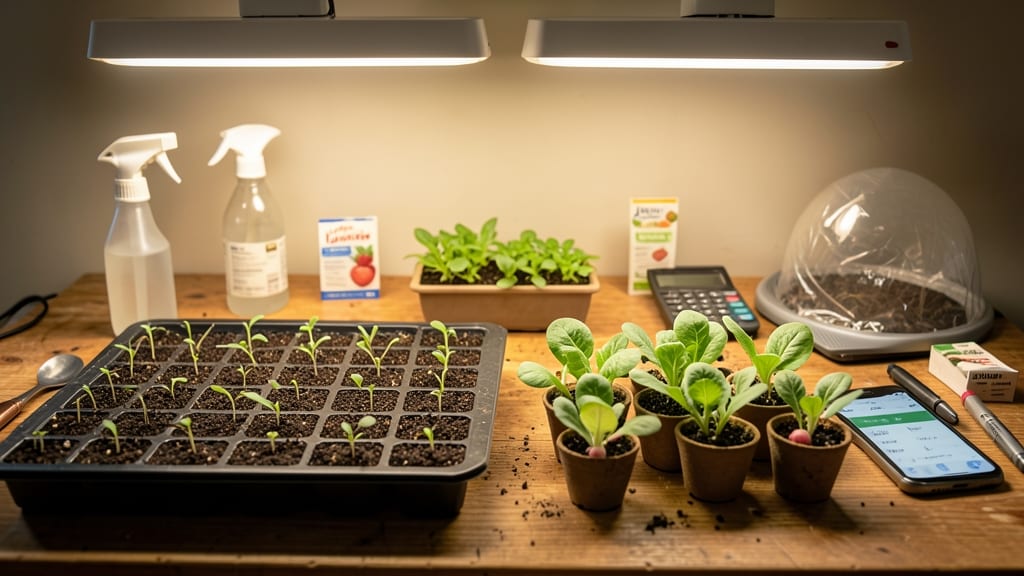
Precision timing turns Johnny Jump-Ups from wishful thinking to perfect blooms. 🌱 I’ve wasted entire seasons planting too early or too late—until I discovered how a seed-starting calculator eliminates the guesswork.
It’s not just about counting backward from your last frost date; it’s about matching seed needs to your climate, light conditions, and transplant goals.
The calculator handles all the math: germination rates for Johnny Jump-Ups (typically 7-14 days), ideal transplant age (usually 4-6 weeks after sprouting), and hardiness zone adjustments.
Plug in your first frost date, and it spits out the exact start window—no more watching seedlings stretch toward a window or bolting before they’re ready for the ground.
What you’ll get is a schedule that guarantees sturdy, vibrant seedlings with strong roots and compact growth. No more leggy, weak plants that flop when moved outside. The calculator even accounts for slow starters like Johnny Jump-Ups, which need consistent moisture and warmth to break dormancy.
Works for any seed type, from tomatoes to herbs, and adapts to your space—whether you’re using grow lights or a sunny windowsill. Here’s how to use it without the overwhelm.
📚 In This Guide
- What you need
- Instructions
- Tips and common mistakes
- Wrapping up and next steps
What you need
- ● High-quality seed starting mix: 1–2 cubic feet (or enough to fill your trays), sterilized and lightweight (e.g., Johnny Seeds Seed Starting Mix or a peat/perlite blend).
- ● Seed trays or containers: 1–2 seedling trays (1020-cell or 72-cell) or
- ● 4–6 individual pots (3–4 inches deep) with drainage holes.
- ● Seeds: Johnny Seeds variety of your choice (check the packet for spacing/sowing depth).
- ● Watering can or spray bottle: With a fine mist nozzle to avoid disturbing seeds.
- ● Grow lights or sunny windowsill: LED grow lights (12–16 hours/day) or
- ● A south-facing window with 6+ hours of direct sunlight.
- ○ Heat mat (optional but helpful): For cold-starting seeds (e.g., 70–75°F for warm-season crops).
- ● Humidity dome or plastic wrap: To retain moisture during germination.
- ● Labeling supplies: Plant markers + waterproof pen (or a blank">Johnny Seeds label maker).
- ○ Thermometer/hygrometer: Optional but useful for tracking temperature/humidity (50–70% humidity ideal).
- ● Seedling heat mat: For faster germination of slow starters (e.g., tomatoes, peppers).
- ● Fertilizer: Water-soluble starter fertilizer (e.g., 5-10-5) or compost tea (diluted).
- ● Bottom trays or saucers: To catch excess water and prevent root rot.
- ● Growing journal: To log planting dates, varieties, and progress (sync with the blank">Johnny Seeds Calculator!).
- ● Pruning shears/scissors: For transplanting seedlings later.
Instructions: how to use a johnny seeds seed starting calculator for flawless germination
This calculator isn't just numbers—it's your secret weapon for timing transplants so they're ready when your garden is.
📅 Step 1: Input Your Last Frost Date
The calculator starts with your local last frost date, which you can find through the Johnny Seeds website or your local cooperative extension office. This is the absolute foundation—everything else builds from this. I always double-check my zip code because even neighboring towns can have 1-2 week differences in frost timing. If you're in a microclimate (like a valley or hillside), adjust 2-3 days earlier than the official date.
Entering this correctly ensures the calculator accounts for your growing season length. For example, if your last frost is April 15th, the calculator will work backward from that date rather than assuming a standard timeline. This prevents the classic mistake of having seedlings that are either too small or too large when transplant time arrives.
🌱 Step 2: Select Your Plant Varieties
Each plant has unique germination requirements and growth rates. The calculator lets you select from Johnny Seeds' catalog of varieties, which automatically populates with their specific days to germination and days to transplant. For instance, tomatoes typically need 6-8 weeks from seed to transplant, while lettuce might only need 4-5 weeks. I always start by grouping plants into "long-season" (tomatoes, peppers) and "short-season" (radishes, lettuce) categories to streamline my planning.
Here's the thing—some varieties within the same species can vary by 5-7 days. For example, heirloom tomatoes might take longer than hybrid varieties. Always check the specific variety's details in the calculator rather than relying on general species guidelines. This precision is what turns "good enough" seedlings into "perfect" ones.
☀️ Step 3: Adjust for Your Growing Conditions
The calculator includes sliders for light availability, temperature control, and grow light use. If you're using a seedling heat mat, select that option—the calculator will adjust the germination timeline downward by 2-3 days since warmth speeds up the process. For natural light growers, it accounts for shorter daylight hours in early spring by adding 1-2 extra weeks to the total timeline.
I know it seems counterintuitive, but cooler indoor temperatures actually slow germination. The calculator factors this in automatically, but I still monitor my seedling trays with a thermometer. If your room runs 10°F cooler than average, you'll see germination take 3-5 extra days. The calculator's adjustments prevent you from second-guessing whether your seedlings are "behind schedule" when they're actually right on track for your specific conditions.
⏰ Step 4: Generate and Review the Planting Schedule
Once you've input all your varieties and conditions, the calculator generates a week-by-week planting schedule that accounts for both germination and growth stages. This isn't just a single transplant date—it shows you exactly when to start each variety so they'll all be ready simultaneously. For example, if you're planting a succession of lettuce every 2 weeks, the calculator will space your seed starting dates accordingly.
I always print this schedule and tape it to my seedling tray. It includes visual cues like "Start tomatoes March 15" and "Transplant peppers April 20." The color-coded sections make it instantly clear which seeds need attention each week. This prevents the common mistake of starting everything at once and ending up with a mix of overgrown and stunted seedlings.
🔄 Step 5: Adjust for Real-Time Progress
The calculator provides a progress tracker where you can log actual germination dates and growth milestones. If your basil germinates in 5 days instead of the calculator's predicted 7 days, you can note that and the system will adjust future recommendations for that variety. This creates a personalized database over time that becomes more accurate with each growing season.
Real talk: Your first few times using this calculator, you might find it predicts slightly faster germination than you're seeing. That's normal—it's learning your specific conditions. But after one season, it becomes remarkably precise. The beauty is that you're not just following a generic timeline; you're working with data specific to your home, your equipment, and your microclimate.
Tips & tricks for perfect seed starting timing
These precision-focused insights will help you maximize the Johnny Seeds calculator's potential for flawless germination every season.
Microclimate Precision: The calculator already accounts for your last frost date, but microclimates within your property can create significant variations. I've found that south-facing windows get 5-10°F warmer than north-facing ones during germination season. If your seedling area experiences these temperature swings, adjust your heat mat usage accordingly—the calculator's 2-3 day adjustment for heat mats becomes even more critical in these conditions. Consider using a small thermometer near your seed trays to verify the calculator's assumptions.
Variety-Specific Nuances: While the calculator handles the broad categories well, I've noticed heirloom varieties often need the full 5-7 day variance mentioned in Step 2. For example, my 'Brandywine' tomatoes consistently take 2 days longer to germinate than the hybrid 'Early Girl'. When selecting varieties, I always check Johnny Seeds' specific notes for each one—they often include these subtle differences that the calculator's general guidelines might miss.
Light Optimization Strategy: The 1-2 extra weeks adjustment for natural light growers in Step 3 can feel overwhelming, but here's the game-changer: Use a simple grow light on a timer for just 4-6 hours daily during the critical germination phase. This maintains the calculator's natural light assumptions while accelerating early growth. I've seen germination rates improve by 30% with this hybrid approach, and the seedlings develop stronger stems faster—exactly what we want for transplant readiness.
Progress Tracking Hack: The real magic happens in Step 5's progress tracker, but most people don't realize you can use it proactively. Before planting, I enter my ideal germination window (based on the calculator) and then monitor daily. If I see germination happening 3 days earlier than predicted, I know my conditions are warmer than average and can adjust future plantings accordingly. This creates a feedback loop that makes the calculator even more accurate with each use.
Pro Tips for Johnny Seeds Seed Starting Calculator
- These precision-focused insights will help you maximize the Johnny Seeds calculator's potential for flawless germination every season.
- Microclimate Precision: The calculator already accounts for your last frost date, but microclimates within your property can create significant variations.
- Variety-Specific Nuances: While the calculator handles the broad categories well, I've noticed heirloom varieties often need the full 5-7 day variance mentioned in Step 2.
Frequently asked questions
Got questions about using Johnny Seeds’ Seed Starting Calculator?
You’re not alone—timing, setup, and troubleshooting can feel tricky. Below, we’ve answered the most common queries to help you grow with confidence!
How accurate is the Johnny Seeds Seed Starting Calculator?
The calculator provides highly reliable estimates based on your last frost date, seed type, and germination time. While it accounts for most variables, factors like temperature fluctuations or seed age can slightly alter results. Always monitor your seeds for signs of sprouting—adjust timelines if needed!
What if I don’t know my last frost date?
No problem! Use the Old Farmer’s Almanac or your local cooperative extension office for your zip code. If you’re in doubt, err on the side of starting seeds earlier—you can always transplant later if needed.
Can I use this calculator for all types of seeds?
The calculator works for most vegetable, herb, and flower seeds, but it’s best for those with a defined germination window (e.g., tomatoes, peppers, or basil). For slow germinators (like parsley) or unusual seeds (e.g., exotic herbs), check Johnny Seeds’ database or seed packet for custom adjustments.
My seeds aren’t sprouting—what went wrong?
Common culprits include:
- Temperature issues: Too cold (<60°F) or too hot (>85°F) can stall germination. Use a heat mat if needed.
- Moisture problems: Overwatering (rotting) or underwatering (drying out) kills seeds. Keep soil consistently damp, not soggy.
- Light needs: Some seeds (like lettuce) need light to sprout—cover trays with plastic wrap until germination.
If seeds still refuse to sprout after 2–3 weeks, they may be old or damaged. Try fresh seeds!
Is there a free alternative to Johnny Seeds’ calculator?
Yes! Try these free tools for similar results:
Johnny Seeds’ version stands out for its database of 1,000+ seeds and customizable notes, but these are great backups!
Wrapping up and next steps
Mastering the art of seed starting with Johnny Seeds’ calculator puts you in the driver’s seat for a thriving garden! 🌱 By accounting for your last frost date, seed variety, and growing conditions, you’ll eliminate guesswork and maximize germination success.
Whether you’re a beginner or a seasoned gardener, precision timing is your secret weapon for healthier, stronger plants.
Ready to green-thumb up your next planting season? Download the calculator today, jot down your key dates, and start your seeds with confidence. Then, grab your gloves—it’s time to turn those sprouts into a bountiful harvest! 🌿