Lawn
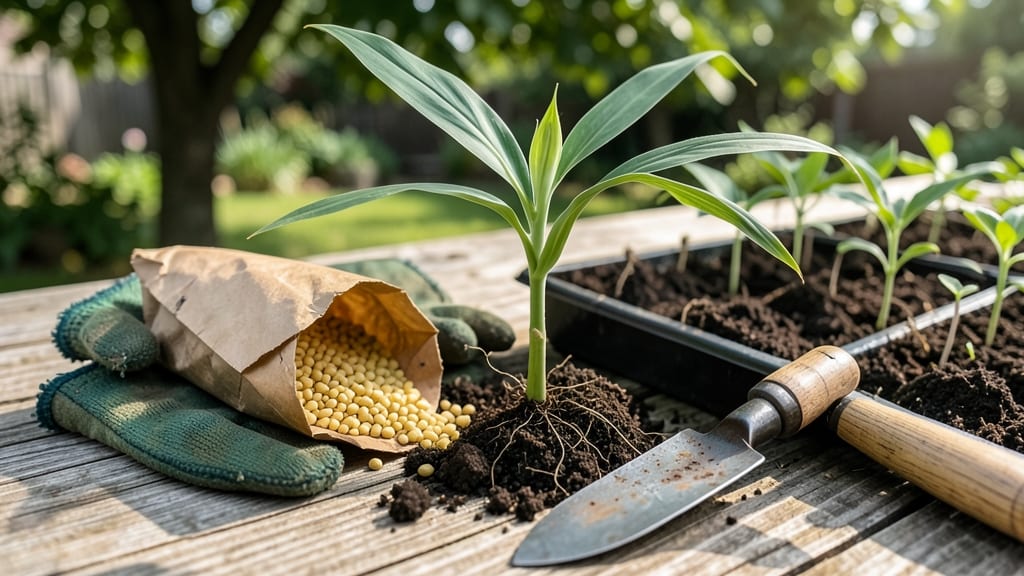
Growing maize from seed lets you harvest golden kernels that taste sweeter than anything you'll find in a store. 🌽 The secret to twist-free pods and viable seeds lies in proper spacing, watering, and timing—something I perfected after my first crop tangled into a mess of tangled stalks and shrunken ears.
Start with well-draining soil rich in organic matter, planting seeds 1 inch deep and 12 inches apart in rows 3 feet apart. Maize needs full sun (6+ hours daily) and consistent moisture, especially during pollination.
Most varieties mature in 90-120 days, but sweet corn can be harvested as early as 60 days for tender ears.
By harvest time, you'll have ears so plump they snap cleanly from the stalk, with kernels that pop off easily when dried. The trick to twist-free pods is thinning seedlings early and staking tall varieties—something I learned the hard way when my first crop leaned into a tangled mess.
Works for both field corn and sweet corn varieties, though sweet corn needs more frequent watering to prevent dry, starchy kernels. Here's how to keep your crop standing tall and productive from seed to harvest.
📚 In This Guide
- What you need
- Instructions
- Tips and common mistakes
- Wrapping up and next steps
What you need
- ● Maize seeds: 1–2 lbs (organic, non-GMO preferred for best viability)
- ● Growing medium: Well-draining potting mix (sterile, 5–10 lbs)
- ● OR garden soil (tested for fertility, pH 6.0–7.0)
- ● Containers: Seedling trays (72-cell, 10–20 trays)
- ● OR biodegradable pots (3–4 inches deep, 10–15 units)
- ● Fertilizer: Balanced organic fertilizer (5-5-5 or 10-10-10, 1–2 lbs)
- ● Watering can or hose: With a gentle spray nozzle
- ● Hand trowel: For transplanting seedlings
- ● Pruners or sharp scissors: For harvesting pods
- ● Measuring tape or ruler: To monitor plant height (aim for 5–7 ft)
- ○ Drying rack or mesh screen: For seed curing (optional but recommended)
- ● Glass jars or paper bags: For seed storage (airtight, 5–10 units)
- ● Sunlight: Full sun (6+ hours daily)
- ● Warmth: Soil temp ≥60°F (15°C) for germination
- ● Space: 12–18 inches between plants (or 36 inches for tall varieties)
- ● Patience: 90–120 days to maturity (depends on variety)
Step-by-Step guide to growing and harvesting maize seeds without twisted pods
Here's how to cultivate healthy maize plants and collect seeds that stay true to type.
🌱 Step 1: Plant Seeds at Proper Depth and Spacing
Start by planting maize seeds 1 inch deep in well-drained soil when nighttime temperatures stay above 60°F. I space my seeds 12 inches apart in rows 3 feet apart—this gives roots room to spread without competing for nutrients. The key here is patience: wait until the soil is warm to the touch before planting, as cold soil slows germination.
Use a planting stick to make holes, then drop in 2-3 seeds per hole. Cover lightly and water gently to avoid displacing seeds. You'll see sprouts in 7-14 days, depending on your climate. If you planted extra seeds, thin to the strongest seedling per hole once they reach 3 inches tall—this prevents overcrowding and ensures each plant gets enough sunlight.
☀️ Step 2: Provide Full Sun and Consistent Moisture
Maize thrives in full sun (6+ hours daily), so choose a location with unobstructed southern exposure. I stake my plants early with bamboo supports to prevent lodging—especially important if you're in a windy area. Water deeply 1-2 times per week, aiming for 1-2 inches of water per week, but adjust based on rainfall. The soil should feel moist 2 inches down—if it's dry, water immediately.
Here's the thing—maize is sensitive to moisture stress during tasseling (when the pollen-producing stalk emerges). If the soil dries out now, you'll see poor pollination and fewer ears. Mulch with 2-3 inches of straw to retain moisture and regulate soil temperature. You'll know you're doing it right when the plants grow 6-8 feet tall with strong, upright stalks.
🌿 Step 3: Monitor Pollination for Healthy Ear Development
Watch for the tassel (the feathery top growth) to emerge, signaling pollination time. The silks (the fine, thread-like strands) will appear from the ear husks, and this is when you need to ensure cross-pollination. Gently shake the tassels over the ears in the morning to distribute pollen—this step is critical for seed viability. You'll see silks turn brown and dry within 10-14 days if pollination was successful.
If silks remain green and limp after a week, your plants may need more pollen. I've found that planting at least 4-5 plants together ensures better cross-pollination. Once the ears are fully formed and silks have dried, leave them on the stalk for another 30-45 days until the kernels harden and the husks turn brown and papery.
✂️ Step 4: Harvest and Dry Pods for Viable Seeds
Harvest ears when the husks turn completely brown and the kernels feel hard when pressed—this usually happens 60-90 days after pollination. Use a sharp knife to cut the stalk 6-8 inches below the ear, leaving the husks intact. Remove the husks carefully to avoid damaging the kernels. Here's where precision matters: twist the ear gently while pulling to separate it from the cob without crushing the kernels.
Dry the ears in a well-ventilated area with 60-70°F temperatures and low humidity (below 50%) for 2-3 weeks. You'll know they're ready when the kernels rattle when shaken. Once dry, rub the kernels between your hands to remove the outer husk, then store them in a cool, dark place in a sealed container. Properly dried seeds will last 2-3 years for replanting.
🌱 Step 5: Store Seeds for Next Season
Before storing, test a few seeds by planting them in a small pot. If they germinate within 7-10 days, your seeds are viable. Store the rest in a sealed container with a desiccant packet to absorb moisture. I label mine with the variety and harvest date—this helps track performance over time. Keep seeds in a cool (50-60°F), dark place away from direct sunlight or temperature fluctuations.
Real talk: if you notice mold or musty smells during storage, discard those seeds immediately. Freshness is key for high germination rates. With proper care, your saved seeds will give you a head start next season—no need to buy new ones every year.
Tips & tricks for perfect maize seed cultivation
These practical insights will help you avoid common pitfalls and maximize your maize seed harvest.
Soil Preparation Secret: Before planting, enrich your soil with a balanced fertilizer (10-10-10 ratio) two weeks ahead of time. Maize is a heavy feeder, and this head start prevents nutrient deficiencies that can lead to poor seed development. I've found that incorporating 2-3 inches of compost into the top 6 inches of soil creates an ideal environment for root growth. The key is to work the amendments in deeply—surface-level additions won't reach the roots where they're needed most.
Pollination Assurance: During Step 3 when monitoring silks, I've discovered that using a small paintbrush to transfer pollen from tassels to silks in the early morning (when humidity is lowest) dramatically improves fertilization rates. This manual pollination becomes especially important if you're growing fewer than 5 plants. Watch for the silks to turn brown within 10-14 days—this color change confirms successful pollination. If you notice any green silks persisting after this period, gently shake the plants again to redistribute pollen.
Harvest Timing Technique: The 60-90 day window for harvest after pollination might seem broad, but there's a precise visual cue: when the husks split naturally along one side, that's your signal to harvest. I've learned to check ears every 3-4 days during this window—waiting too long can lead to kernel shattering, while harvesting too early results in seeds that won't dry properly. For the most reliable results, harvest in the morning when temperatures are coolest to preserve kernel moisture during the drying process.
Drying Optimization: When drying your ears in Step 4, place them in a single layer on a screen or rack rather than stacking them. This circulation prevents moisture buildup that can lead to mold. I've found that positioning a small fan nearby (on low setting) helps maintain consistent airflow without creating drafts. The 60-70°F temperature range is critical—any hotter and you risk cracking kernels, while cooler temperatures slow the drying process. Monitor humidity closely, as levels above 50% can create the perfect environment for fungal growth.
Pro Tips for Seed Of Maize
- These practical insights will help you avoid common pitfalls and maximize your maize seed harvest.
- Soil Preparation Secret: Before planting, enrich your soil with a balanced fertilizer (10-10-10 ratio) two weeks ahead of time.
- This manual pollination becomes especially important if you're growing fewer than 5 plants.
Frequently asked questions
Got questions about growing maize seeds or harvesting them the right way? Here are some of the most common ones—and their answers!
How long does it take for maize seeds to mature for harvesting?
Maize seeds typically take 90 to 120 days to mature after planting, depending on the variety. Look for tassels (the pollen-producing stalks) to turn brown and dry out—this signals it’s time to harvest. If you’re growing for seed, wait until the kernels feel hard and dry to the touch.
Why are my maize seeds shriveled or not viable?
Shriveled or non-viable seeds often result from over-moisture, poor pollination, or harvesting too early. Ensure plants receive consistent sunlight and water (1–1.5 inches per week) and avoid harvesting until kernels are fully dry. If pollination fails, hand-pollinate by transferring tassel pollen to silks with a paintbrush.
Can I save maize seeds from store-bought corn?
No—store-bought corn is hybridized for sweetness, not seed viability. For saving seeds, plant open-pollinated or heirloom varieties instead. If you’re curious, try growing a small patch of flint or dent corn, which are bred for seed production.
What’s the best time of day to harvest maize seeds?
Harvest on a dry, sunny morning when humidity is low. This reduces mold risk and helps seeds dry faster. Avoid harvesting after rain or in the evening, as damp conditions can spoil seeds. Let harvested ears dry in a well-ventilated, shaded area for 2–3 weeks before shelling.
Are there alternatives to growing maize for seeds?
Yes! If maize isn’t ideal for your climate, try sorghum, amaranth, or sunflower seeds—they’re drought-tolerant and easy to grow. For a fast harvest, consider buckwheat, which matures in just 60–70 days. Just check seed-saving guidelines for each plant!
Wrapping up and next steps
Growing maize from seed is a rewarding journey that connects you to nature’s bounty—especially when you master the art of twist-free pod harvesting for viable seeds! By following the right techniques, you’ll ensure strong germination and a thriving crop year after year. 🌱
Ready to take the next step? Start small—plant a few pods in your garden or even containers—and experiment with different varieties. Your green thumb will thank you, and soon, you’ll be sharing fresh, homegrown maize with pride! Happy planting! 🌾