Planting
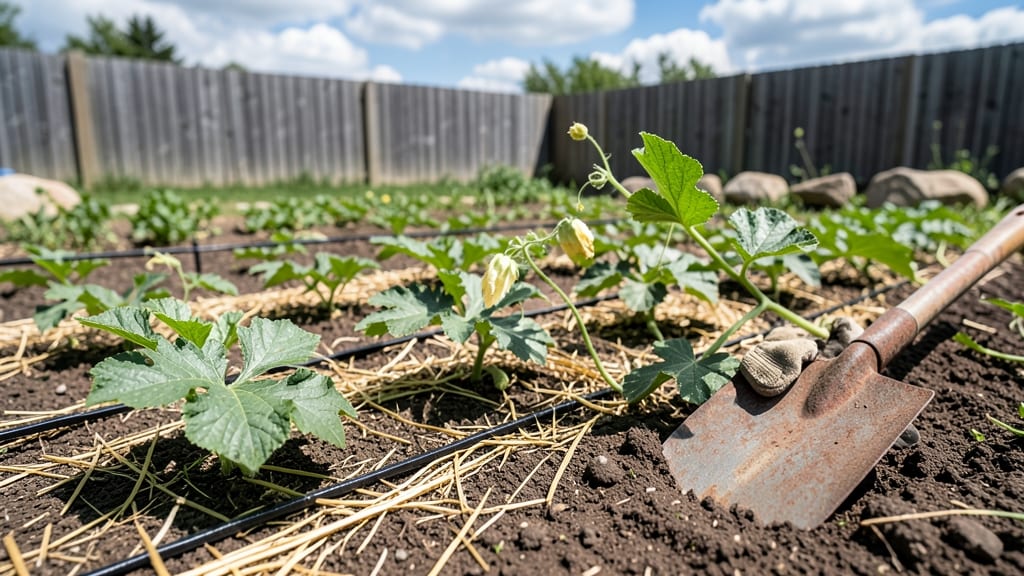
Your watermelon harvest starts with seed spacing that feels counterintuitive—plant them too close, and they’ll fight for sunlight and nutrients, leaving you with bitter, undersized fruit. ✨ The science-backed 6-inch spacing between seeds in rows 5-6 feet apart gives vines room to sprawl while directing energy toward fruit development, not competition.
I learned this the hard way after watching my first crop produce tiny, seedy melons because the plants were crowded like sardines.
This spacing works whether you’re growing in warm climates like Texas or cooler regions like Pennsylvania—just adjust planting time to avoid early frosts. The key is loose, well-draining soil mixed with compost before planting, so roots can establish quickly.
Most gardeners skip this prep, and that’s when problems start: poor germination, weak vines, and fruit that never matures. Don’t be one of them.
By following these rows, you’ll end up with vines that stretch 6-10 feet and produce 3-5 melons per plant—each one sweet, heavy, and crack-resistant. The first harvest arrives in 75-90 days, and the vines keep producing if you keep them healthy.
Imagine slicing into a melon so ripe it’s practically dripping, all because you gave the roots the space they needed.
For small spaces, try vertical trellising—it cuts row spacing to 3-4 feet while saving ground. Just be ready to prune aggressively to control vine growth. Whether you’re working with a full garden bed or a balcony setup, the principle stays the same: space = bigger, sweeter melons.
Let’s get those seeds in the ground right.
📚 In This Guide
- What you need
- Instructions
- Tips and common mistakes
- Wrapping up and next steps
What you need
- ● Watermelon seeds: Choose disease-resistant varieties (e.g., 'Sugar Baby,' 'Crimson Sweet'). Aim for 3-5 seeds per hill (thin to 1-2 strongest plants per hill).
- ● Well-draining soil: Loamy soil with a pH of 6.0–6.8. Test your soil or amend with compost (2–3 inches mixed in).
- ● Fertilizer: Balanced 10-10-10 or organic options like composted manure (apply at planting and mid-season).
- ● Mulch: Straw or black plastic (to retain moisture and suppress weeds).
- ● Garden trowel or transplanting spade (for digging holes).
- ● Measuring tape or ruler (to ensure 3–6 feet between hills and 6–12 feet between rows).
- ● Watering can or hose with a gentle spray nozzle (avoid disturbing seeds).
- ○ Garden gloves (optional but helpful for messy soil).
- ● Seedling trays (for starting seeds indoors 2–3 weeks before last frost).
- ● Row covers (to protect young seedlings from pests).
- ● Trellis or cages (for smaller varieties like 'Mini Melons').
- ● Soil thermometer (ensure soil is 70°F+ before planting).
How to space watermelon seeds for maximum vine strength and yield
Perfect spacing isn't just about fitting plants—it's about giving vines room to thrive. Here's how to position seeds for strong growth and larger fruit.
🌱 Step 1: Prepare the Soil and Mark Your Planting Rows
Watermelons need loose, well-draining soil with a pH between 6.0 and 6.8. Work in 2-3 inches of compost before planting to improve fertility and drainage. I like to till the soil to a depth of 8-10 inches—this prevents root competition later when vines spread.
Use a string line and stakes to mark rows 5-6 feet apart. This spacing accounts for the 6-8 foot vine spread of mature watermelon plants. For each row, create 12-inch-wide beds to concentrate warmth and moisture where roots will grow. Avoid planting in low spots where water pools—roots rot easily in soggy soil.
🌱 Step 2: Plant Seeds at the Correct Depth and Spacing
Watermelon seeds should go 1 inch deep in the soil. I plant 2-3 seeds per hill, spaced 3-4 inches apart within the hill. This gives you backup seedlings in case some fail to germinate. Once seedlings emerge, thin to one strong plant per hill—crowding leads to weak vines and smaller fruit.
Space hills 3-4 feet apart along the row. Here's the key: wider spacing = fewer but larger melons. If you're short on space, you can reduce spacing to 2 feet, but expect smaller yields. I always plant extra seeds—30% more than needed—because germination rates vary, and some seedlings may fail.
☀️ Step 3: Thin Seedlings and Train Vines Early
When seedlings reach 2-3 inches tall, thin to the strongest plant per hill. Use sharp scissors to cut unwanted seedlings at the base—never pull them—to avoid disturbing roots. The remaining plant should have 3-4 true leaves and a sturdy stem before final thinning.
Once vines start running, train them along trellises or rows to prevent tangling. I use black plastic mulch in the rows to retain heat and suppress weeds—this also makes harvesting easier. Leave 12-18 inches of space between vines as they grow to ensure airflow and reduce disease risk.
💧 Step 4: Monitor Vine Growth and Adjust Spacing as Needed
Watermelon vines grow aggressively, so check them weekly after thinning. If vines start crowding—leaves touching or competing for sunlight—prune back excess tendrils to maintain 12-inch spacing between plants. Focus on keeping the main vine strong rather than letting side runners sprawl.
Here's where many gardeners go wrong: overcrowding for "more plants". Remember, watermelons need space to breathe. If you see vines competing, remove the weaker one immediately. Strong, spaced-out vines produce larger, sweeter melons—not just more of them.
⏰ Step 5: Time Your Harvest Based on Proper Spacing
With correct spacing, watermelons mature 70-90 days after planting. Look for uniform color, a dull rind (not shiny), and a creepy-crawly sound when tapped—these are signs of ripeness. Proper spacing ensures vines don’t overproduce small fruit, so you’ll get fewer but larger, higher-quality melons.
Harvest in the morning when temperatures are cooler to preserve sweetness. Use a sharp knife to cut stems—never twist—to avoid damaging the vine. After harvest, remove old vines and compost them (unless diseased) to prepare for next season’s planting.
Tips & tricks for perfect watermelon vine spacing
These game-changing insights will help you maximize your harvest with minimal effort—no more wasted space or underperforming vines.
Soil Preparation Secret: Before marking your rows, test your soil's pH with a simple kit. If it's below 6.0, amend with lime (apply 2-3 months before planting). For sandy soil, mix in 1-2 inches of compost beyond the initial 2-3 inches—this improves water retention without compacting roots. I've found that adding a thin layer of perlite or vermiculite to the top inch of soil after planting helps maintain that ideal loose texture for emerging roots.
Planting Depth and Germination: Watermelon seeds need consistent moisture to germinate, so water the soil to 1 inch deep right before planting. After sowing your 2-3 seeds per hill, cover them with a 1/4-inch layer of fine mulch to prevent soil crusting that can block seedlings. If germination is slow (after 10-14 days), gently scratch the soil surface to break any crust that might be forming.
Vine Training Hack: When training vines along trellises in Step 3, use soft garden twine instead of wire—it's gentler on tender vines and won't cause abrasions. I tie vines loosely at first, then tighten as they thicken. For rows without trellises, create a simple "guide wire" system using 4-foot stakes every 10 feet along the row, with horizontal wires at 12-inch intervals. This gives vines structure without restricting growth.
Harvest Timing Insight: The 70-90 day maturity window can vary by variety—check seed packets for specific estimates. For early varieties, I start checking for ripeness at 65 days (5 days early), while heirlooms often need the full 85-90 days. The "creepy-crawly" sound when tapping comes from the seeds rattling inside—this is your most reliable indicator of sweetness, especially in hot climates where other signs can be misleading.
Pro Tips for Watermelon Seed Spacing
- These game-changing insights will help you maximize your harvest with minimal effort—no more wasted space or underper...
- Soil Preparation Secret: Before marking your rows, test your soil's pH with a simple kit. If it's below 6.0, amend wi...
- Planting Depth and Germination: Watermelon seeds need consistent moisture to germinate, so water the soil to 1 inch d...
Frequently asked questions
Got questions about watermelon seed spacing?
You’re not alone! Here are answers to the most common concerns—so you can plant with confidence and maximize your harvest.
How close can I plant watermelon seeds?
Watermelon seeds need space to thrive! Plant them 12–24 inches apart in rows spaced 5–7 feet apart. Closer spacing (under 12 inches) can lead to overcrowding, stunted growth, and smaller fruits. Give them room to spread—your future melons will thank you!
When is the best time to space watermelon seeds properly?
Timing matters! Plant seeds 2–3 weeks after your last frost date when soil temps hit 70°F+. If starting indoors, transplant seedlings 1–2 weeks before the last frost and space them immediately. Avoid early planting—cold soil slows germination and weakens vines.
Can I use mulch to help with seed spacing?
Mulch (straw, grass clippings, or black plastic) helps suppress weeds, retains moisture, and regulates soil temp—all while keeping seeds/seedlings neatly spaced. Just avoid piling mulch directly on seeds (keep it 2–3 inches away) to prevent rot. Pro tip: Use black plastic mulch for faster warming and earlier harvests!
What if my watermelons are overcrowded?
No stress—you can fix it! Thin seedlings to 12–18 inches apart when they’re 2–3 inches tall, keeping the strongest plants. If vines are already sprawling, prune excess runners (but leave 1–2 main vines per plant) to redirect energy to fruit production. Overcrowded plants = fewer, smaller melons.
Does seed spacing change for dwarf or miniature watermelons?
Yes! Dwarf varieties (like ‘Sugar Baby’ or ‘Tiny Tim’) can be planted 8–12 inches apart in rows 3–4 feet apart. Their compact vines save space, but they still need airflow to prevent disease. Check the seed packet for variety-specific guidelines—smaller doesn’t mean they don’t need room to shine!
Wrapping up and next steps
Perfecting your watermelon seed spacing is the secret to a thriving, high-yield garden! 🌱 By following science-backed techniques—like spacing seeds 6–12 inches apart in rows 3–5 feet apart—you’ll maximize sunlight, airflow, and root growth, leading to juicier, sweeter fruit.
Remember, consistency is key, whether you’re planting in raised beds, hills, or containers.
Now that you’re armed with the know-how, it’s time to roll up your sleeves and get planting! Start small, keep notes on what works best in your climate, and soon you’ll be harvesting bountiful, vine-ripened watermelons that’ll make your neighbors green with envy. Happy growing! 🍉✨