Lawn
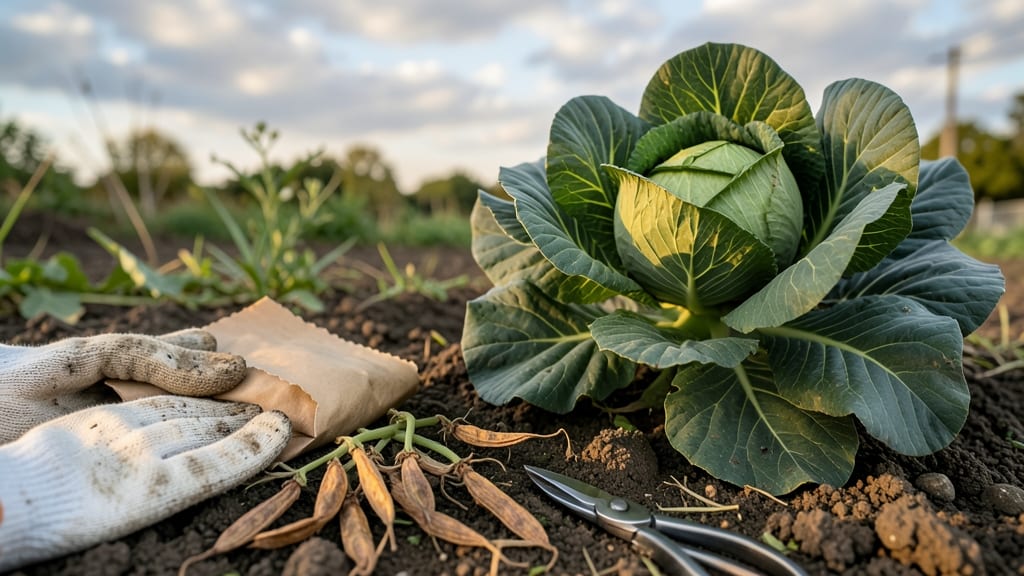
Saving cabbage seeds from their pods is the easiest way to grow your own plants for years to come—no twisting, no mess. 🌱 I’ve harvested seeds this way for over a decade, and once you see how simple it is, you’ll never buy cabbage seeds again.
The key is knowing when the pods are ready and handling them just right to preserve viability.
You’ll need mature cabbage plants (like Savoy or January King), a dry spot to work, and a few tools: scissors for cutting stalks, a paper bag for drying, and a fine-mesh strainer for cleaning.
The best time to collect pods is late summer or early fall, when they’ve turned brown and dried on the plant but haven’t yet split open.
Once you’ve dried the pods completely, simply rub them between your palms to release the seeds—no twisting required. Store them in an airtight container in a cool, dark place, and they’ll stay viable for up to 3 years. When planting time comes, soak the seeds overnight for faster germination.
This method works for any cabbage variety, and you’ll end up with plants that thrive in your exact climate—no guesswork. The first year, you might get fewer seeds, but each harvest gets easier. Ready to turn trash into treasure?
📚 In This Guide
- What you need
- Instructions
- Tips and common mistakes
- Wrapping up and next steps
What you need
- ● Mature cabbage plant (preferably Brassica oleracea, like green or red cabbage) with fully formed seed pods.
- ● Pair of gardening gloves (nitrile or cotton) to protect your hands.
- ● Sharp pruning shears or small garden scissors (sterilized with rubbing alcohol).
- ● Paper towels or newspaper (for drying and cleaning).
- ● Small bowl or container (for collecting pods).
- ● Paper bags or breathable mesh bags (for drying seeds indoors).
- ● Labeling tags & marker (to track seed varieties).
- ● Seed pod tray or screen (for air-drying pods efficiently).
- ● Fine-mesh sieve (to separate seeds from chaff later).
- ● Humidity monitor (if drying indoors in damp climates).
- ● Desiccant packets (to absorb moisture during storage).
- ● Small fan (for faster drying in humid conditions).
How to extract cabbage seeds without twisting the pods
Save seeds effortlessly and avoid the messy, frustrating twist method—this gentle approach keeps pods intact.
🌱 Step 1: Harvest Mature Cabbage Pods
Pick pods when they turn from green to light brown and feel dry to the touch. This usually happens 4-6 weeks after flowering, when the seed pods are fully formed but haven’t split open. Avoid damp pods—they’ll mold before you can extract seeds.
Use clean, sharp scissors to snip the pods from the plant. Lay them on a paper towel in a single layer to dry for 3-5 days in a warm, dry spot. A sunny windowsill works perfectly. You’ll know they’re ready when they rattle slightly when shaken—this means the seeds are loose inside.
🪴 Step 2: Prepare the Pods for Seed Extraction
Place the dried pods in a quart-sized resealable bag (the one you’ll use for storage). Gently crush the pods with your hands—no twisting needed. The goal is to break them open just enough so the seeds spill out naturally. If you twist, you risk crushing the seeds or contaminating them with pod debris.
Shake the bag vigorously for 30 seconds to release the seeds. Empty the contents onto a white plate or tray for easy sorting. The seeds will be small and dark, while the pod fragments will be lighter and easier to pick out.
✂️ Step 3: Clean and Store the Seeds
Use a fine-mesh strainer or a piece of window screen to sift through the seeds. Discard any remaining pod bits or debris—this keeps your seeds pure and prevents mold. For extra cleanliness, spread the seeds on the plate and use a soft paintbrush to remove any lingering fragments.
Store the clean seeds in a small envelope or airtight container with the variety name and harvest date written on it. Keep them in a cool, dark place (like a pantry or fridge) where they’ll stay viable for 3-5 years. Labeling now saves headaches later—trust me, you’ll forget which cabbage you grew!
💧 Step 4: Test Seed Viability (Optional but Recommended)
Before planting next season, test a few seeds to ensure they’re still good. Place 10 seeds between two damp paper towels in a ziplock bag. Seal it and keep it in a warm spot (70-75°F) for 5-7 days. Check daily—if 80% or more sprout, your seeds are ready for planting.
If fewer than half sprout, store the remaining seeds in the freezer for an extra year—the cold helps preserve viability. This simple test gives you confidence that your zero-waste efforts will pay off with a thriving garden.
Tips & tricks for perfect cabbage seed pod extraction
Here's what I learned the hard way after struggling with brittle pods and wasted seeds.
Timing is Everything: In Step 1, when you're drying the pods for 3-5 days, don't rush this process. I tried cutting it to 2 days once and ended up with seeds that were still stuck to the pods. The pods need that full drying time to become truly brittle and release seeds cleanly. Place them in a spot where they get indirect sunlight—direct sun can overheat and cause premature splitting.
The Gentle Crush Technique: When you're crushing the pods in Step 2, think of it like rolling a pie crust—you want to break them open just enough to release the seeds without pulverizing everything. The key is to use a rolling motion with your hands rather than squeezing. This preserves the seed quality and makes sorting much easier later. I've found that using a small wooden spoon helps break them open more evenly if your hands struggle.
Storage Wisdom: For Step 3, when storing your seeds, consider adding a small packet of silica gel to your airtight container. This helps absorb any moisture that might cause mold over those 3-5 years. I've also started labeling my containers with both the variety name AND the year harvested—this prevents mix-ups when you're ready to plant next season. A simple marker on the container lid works perfectly.
Pro Tips for Cabbage Seed Pods
- Here's what I learned the hard way after struggling with brittle pods and wasted seeds.
- Timing is Everything: In Step 1, when you're drying the pods for 3-5 days, don't rush this process.
- The Gentle Crush Technique: When you're crushing the pods in Step 2, think of it like rolling a pie crust—you want to break them open just enough to release the seeds without pulverizing everything.
Frequently asked questions
Got questions about cabbage seed pods? You’re not alone! Here are some of the most common queries—and their answers—to help you master twist-free extraction and zero-waste gardening.
What are cabbage seed pods, and why should I care?
Cabbage seed pods are the dried, papery husks that hold cabbage seeds. They’re a zero-waste way to save seeds from store-bought cabbage heads—no need for fancy seed packets! Just let the pods dry, extract the seeds, and store them for next year’s garden. It’s simple, eco-friendly, and cost-effective!
How long do I need to dry cabbage seed pods before opening them?
Patience is key! Let the pods dry completely in a warm, dry place for 2–4 weeks. They’re ready when they’re crispy, brown, and rattle when shaken. If they’re still green or soft, give them more time—rushing can ruin seed viability.
Can I reuse cabbage seed pods for anything else?
Once you’ve extracted the seeds, the empty pods can be:
- Composted (they break down easily).
- Used as eco-friendly fillers for crafts (like potpourri or holiday decorations).
- Crushed into mulch for your garden beds.
What if my cabbage seed pods won’t open or the seeds are moldy?
If pods resist opening, they’re likely under-dried. Try:
- Baking them at 200°F (93°C) for 10–15 minutes to speed up drying.
- Checking for moisture—store them in a paper bag (not plastic) to prevent mold.
Are cabbage seed pods the same as other seed pods (like broccoli or kale)?
Not exactly! While broccoli and kale also produce seed pods, cabbage pods are thinner and more delicate. They dry faster and are easier to crack open. For tougher pods (like broccoli), you might need a small hammer or pliers to gently pry them open. Always handle with care to avoid damaging seeds!
Wrapping up and next steps
Extracting seeds from cabbage pods doesn’t have to be messy or wasteful—it’s a simple, rewarding process that turns kitchen scraps into useful resources! 🌱 Whether you’re saving seeds for next season, reducing waste, or just curious about sustainable gardening, this twist-free method makes it easy.
Now that you’re equipped with the right tools and tips, why not give it a try? Grab a cabbage, follow the steps, and enjoy the satisfaction of zero-waste gardening. Happy growing! 🌿