
Propagation
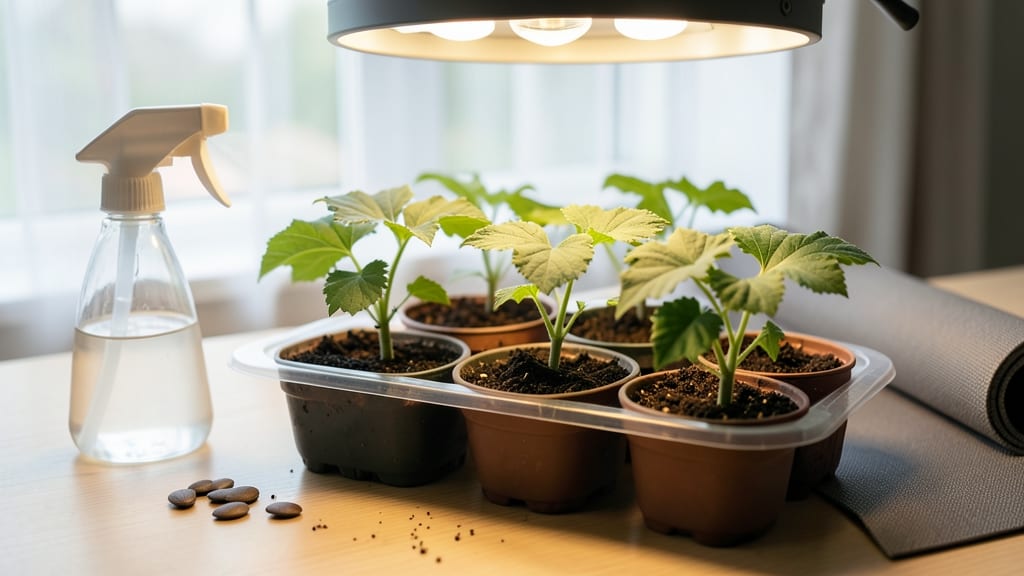
Fast germination starts with the right mix and timing. 🌱 I’ve grown zucchini from seed indoors for years, and the secret to beating slow starts is using a lightweight loam mix that warms up quickly.
Most people overlook how soil texture affects speed—too dense, and seeds suffocate; too light, and they dry out. The magic happens in 5-7 days with consistent warmth (70-80°F) and moisture. You’ll need shallow trays, a heat mat (optional but game-changing), and bright light from day one.
Skip the fancy setups—even a sunny windowsill works if you supplement with a grow light. By the time you transplant, seedlings will be stocky and ready for the garden. The key is avoiding leggy stems (too little light) and damping-off (overwatering).
I’ve lost count of how many times I’ve saved seedlings with proper airflow and spacing. Works for any indoor space, from basements to sunrooms. Here’s how to get those seeds sprouting fast!
📚 In This Guide
- What you need
- Instructions
- Tips and common mistakes
- Wrapping up and next steps
What you need
- ● Zucchini seeds: 3–5 seeds (choose heirloom or hybrid varieties like 'Black Beauty' or 'Eight Ball' for best results).
- ● Seed-starting containers: 4–6 small pots (3–4 inches deep) or a seed tray with cell inserts (2–3 inches deep).
- ● Material: Biodegradable pots (peat or coconut coir) or plastic pots with drainage holes.
- ● Lightweight loam mix: 2–3 cups of a well-draining seed-starting mix (avoid garden soil—it’s too dense!).
- ○ Optional boost: Add perlite or vermiculite (10–20%) for aeration.
- ● Grow lights or sunny windowsill: Grow lights: LED or fluorescent (12–16 hours/day, 6–12 inches above seedlings).
- ● Natural light: South-facing window (6+ hours of direct sunlight).
- ● Misting bottle or spray nozzle: For gentle watering to keep soil moist (not soggy!).
- ○ Heat mat (optional but helpful): 70–80°F (21–27°C) bottom heat speeds up germination (use for 7–10 days).
- ● Labels & markers: To track planting dates and varieties.
- ● Humidity dome or plastic wrap: Keeps seeds cozy until germination (remove once sprouts appear!).
- ● Fertilizer: Diluted fish emulsion or seaweed extract (after true leaves emerge).
- ● pH test kit: Ensure soil pH is 6.0–6.8 (zucchini loves slightly acidic soil!).
- ● Transplanting tools: Small hand trowel or butter knife for moving seedlings later.
Step-by-Step instructions for growing zucchini from seed indoors
Here's how to get zucchini seeds sprouting in just 3-5 days—no fancy equipment needed.
🌱 Step 1: Prepare Containers and Lightweight Loam Mix
Fill 4-inch deep seed-starting trays with the lightweight loam mix, leaving about ½ inch space at the top. I press the mix down gently with my fingers until it's firm but still fluffy—like a damp sponge. This ensures good root contact without compacting too tightly.
Moisten the mix thoroughly until water runs out the bottom drainage holes, then let it drain completely. Overly wet soil slows germination, so I always let it sit for 10-15 minutes after watering to equalize moisture. The surface should look dark and slightly damp but not glistening.
🌱 Step 2: Sow Seeds at the Right Depth
Plant 2-3 seeds per cell at a depth of about 1 inch—that's roughly twice the seed's diameter. I use my finger to make small holes, drop in the seeds, then cover them lightly with more mix. Pressing too hard can damage the seeds, so I just pat the surface gently.
Label each cell with the variety and date—zucchini seeds germinate quickly, and you'll want to know exactly when they sprouted. Place the tray in a warm spot (75-85°F) like on top of the fridge or near a sunny window. This warmth is key for those fast germination results.
💧 Step 3: Maintain Moisture Without Overwatering
Cover the tray with a clear plastic dome or wrap to trap warmth and humidity. Check daily but only mist the soil lightly if it feels dry to the touch. Too much water now causes seeds to rot before they sprout. You'll see condensation on the dome—this is normal and helps speed germination.
Most seeds will sprout in 3-5 days, but some stubborn ones might take up to 10 days. Once you see the first green shoots, remove the dome immediately to prevent fungal issues. Keep the soil consistently moist but never soggy—zucchini seedlings hate wet feet.
☀️ Step 4: Provide Bright Light for Strong Seedlings
Move the tray to a spot with 12-14 hours of bright light daily. A south-facing window works, but I supplement with a grow light if natural light is weak. Keep the light 2-3 inches above the seedlings—they'll stretch toward it if it's too far away.
Watch for leggy growth (long, thin stems with small leaves). This means the light isn't strong enough. If you see this, move the light closer or add a second light source. Strong seedlings have thick stems and dark green leaves—these are your winners.
🪴 Step 5: Transplant When Ready for the Garden
After 3-4 weeks, when seedlings have 2-3 true leaves and are 3-4 inches tall, they're ready to move outside. Harden them off by placing them outdoors in a shaded spot for 1-2 hours the first day, gradually increasing time over 5-7 days.
Transplant on a cloudy day or in the evening to reduce stress. Bury the seedlings deeper than they were in the tray—zucchini vines grow from the stem, so more buried stem means more roots. Water deeply after planting to help them settle in.
Tips & tricks for fast zucchini germination indoors
Here's what nobody tells you about speeding up those first critical days of zucchini growth.
Soil Temperature Secret: The 75-85°F range in Step 2 isn't just a suggestion—it's non-negotiable for fast germination. I learned this the hard way after waiting 14 days for seeds that never sprouted in a cooler room. Place your tray on top of the fridge or use a seedling heat mat if your home stays below 70°F. The warmth triggers enzymes that break down seed coatings, which is why you'll see sprouts in just 3-5 days.
Lightweight Mix Hack: When pressing down the lightweight loam mix in Step 1, think "firm but fluffy" - like a damp sponge. Too much pressure cuts off oxygen to roots, while too little leaves air pockets that seeds can't anchor into. I use my fingertips to gently compress the mix until it holds its shape but still springs back slightly when pressed. This creates the perfect balance for root development.
Germination Timeline: Those 3-5 days in the instructions can stretch to 10 days if conditions aren't ideal. The key is consistency: check moisture daily (Step 3) by sticking your finger ½ inch into the mix - it should feel like a wrung-out sponge. If you see mold or black spots on the soil surface, remove the dome immediately and let it dry out for 24 hours to prevent seed rot.
Transplanting Trick: In Step 5, when burying seedlings deeper than their original height, you're actually encouraging stronger root systems. Zucchini vines grow from stem nodes, so more buried stem means more potential roots. I like to bury up to ⅔ of the stem length - just leave the top leaves exposed to sunlight. This gives you a head start on a robust plant before it even hits the garden.
Pro Tips for Growing Zucchini From Seed Indoors
- Here's what nobody tells you about speeding up those first critical days of zucchini growth.
- Soil Temperature Secret: The 75-85°F range in Step 2 isn't just a suggestion—it's non-negotiable for fast germination.
- Lightweight Mix Hack: When pressing down the lightweight loam mix in Step 1, think "firm but fluffy" - like a damp sponge.
Frequently asked questions
about growing zucchini from seed indoors—here’s what you need to know before you start!How long does it take for zucchini seeds to germinate indoors?
Zucchini seeds typically sprout in 5–10 days when kept in a warm, moist environment (70–85°F). Use a heat mat if your home is cooler than 65°F to speed up germination. Keep the soil consistently damp but not soggy—patience is key! Pro tip: A clear plastic dome or bag can help retain humidity.
When should I transplant zucchini seedlings outdoors?
Wait until after the last frost and soil temps are above 60°F (usually 2–3 weeks after sowing indoors). Seedlings should be 3–4 inches tall with 2–3 true leaves. Harden them off for 7–10 days by gradually exposing them to outdoor conditions to avoid shock. Pro tip: Use a row cover if nighttime temps dip below 50°F.
Can I grow zucchini indoors year-round?
Zucchini needs 6–8 hours of sunlight daily, so unless you have a south-facing window or grow lights, it’s tricky indoors long-term. For year-round growth, use full-spectrum LED grow lights (12–16 hours/day) and a warm spot (70–85°F). However, outdoor plants thrive better due to space and pollination needs. Alternative: Try dwarf varieties like 'Eight Ball' for smaller spaces.
What should I do if my zucchini seedlings look leggy or weak?
Leggy seedlings mean too little light or overcrowding. Move them closer to a sunny window or under grow lights (4–6 inches away). Thin seedlings to 12 inches apart and fertilize lightly with a balanced liquid fertilizer (like 10-10-10) to encourage sturdy growth. Troubleshoot: Rotate pots weekly for even light exposure.
Why aren’t my zucchini flowers producing fruit?
Zucchini is self-pollinating, but indoor plants may need help. Gently shake plants or use a small paintbrush to transfer pollen between male (long stems) and female (tiny zucchini at base) flowers. Ensure temps stay above 60°F and provide adequate humidity (40–60%). Fix: A fan on low can improve air circulation for better pollination.
Wrapping up and next steps
Growing zucchini from seed indoors is a rewarding journey that combines patience, care, and a little creativity! 🌱 With the right lightweight loam mix, proper warmth, and consistent moisture, you’ll soon be watching those tiny sprouts burst into life—ready to thrive under your watchful eye.
Once your seedlings are strong enough, it’s time to transplant them outdoors and let nature do its magic!
Now that you’re armed with the knowledge, roll up your sleeves and get growing! Start with just a few seeds, experiment with your setup, and enjoy the satisfaction of harvesting your own homegrown zucchini. Your garden (and your taste buds) will thank you! 🍆✨