Lawn
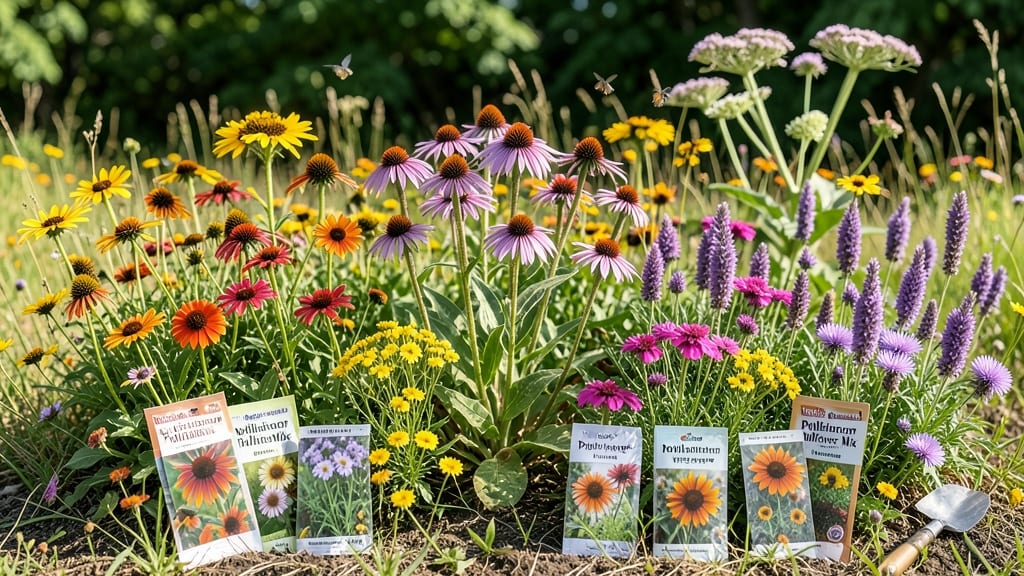
A Northeast pollinator wildflower seed mix transforms your yard into a buzzing, fluttering ecosystem—starting with just a handful of seeds. 🌻 I planted mine last spring in a sunny corner, and by July, monarchs and bumblebees were claiming it as their own.
The key isn’t just the seeds; it’s the right soil, timing, and a little patience to coax these cold-hardy blooms through our unpredictable climate.
You’ll need a sunny spot (at least 6 hours of light daily), loose soil amended with compost, and no fertilizer—wildflowers thrive on nature’s balance. Plant seeds in early spring or fall when soil temps are cool but workable, then keep them lightly watered until established.
Native species like bee balm, black-eyed Susan, and butterfly weed handle our frosts and droughts like pros, while hummingbirds can’t resist the tubular blooms.
By midsummer, you’ll have a nonstop bloom parade—some species flowering in spring, others stretching into fall. The air hums with pollinators, and even your neighbors will ask how you did it.
Maintenance is easy: trim back spent blooms in late fall, leave seed heads for winter interest, and resist the urge to tidy too early in spring.
This mix works in gardens, meadows, or even container edges—just adapt the scale. The real magic? Every seed you plant is a vote for biodiversity. Let’s get those wildflowers growing!
📚 In This Guide
- What you need
- Instructions
- Tips and common mistakes
- Wrapping up and next steps
What you need
- ● Northeast Pollinator Wildflower Seed Mix – 1 to 5 lbs, depending on the area you’re planting (check the seed packet for coverage rates).
- ● Preparation tools: Garden rake or hoe – for clearing debris and loosening soil.
- ○ Hoe or tiller – optional but helpful for breaking up compacted soil.
- ● Watering supplies: Garden hose with a spray nozzle or watering can.
- ● Water – about 1 inch per week (adjust for rain).
- ● Seed spreader – for even distribution over large areas.
- ● Garden gloves – to protect your hands while prepping soil.
- ● Mulch or straw – to retain moisture and suppress weeds (apply lightly after planting).
- ● Stakes or markers – if planting in rows or specific designs.
- ● A sunny or partially sunny spot – at least 4-6 hours of sunlight daily for best results.
- ● Well-draining soil – amend with compost if your soil is heavy or clay-like.
- ● Patience! – Wildflowers may take 2-3 weeks to germinate and 6-12 months to reach full bloom.
Step-by-Step guide to planting a Northeast pollinator wildflower meadow
Transform your yard into a buzzing, blooming haven with this simple, science-backed approach.
🌱 Step 1: Prepare the Soil for Optimal Germination
Start by clearing the planting area of weeds, grass, and debris. I like to use a broadfork to loosen the top 4-6 inches of soil without disturbing the natural soil structure below. This aeration helps roots penetrate easily while preserving beneficial microbes. If your soil is heavy clay, mix in 2-3 inches of compost to improve drainage and fertility.
Rake the area smooth but leave the surface slightly rough—this gives tiny seeds something to grip. Avoid tilling too deeply, as wildflower roots often grow shallow and prefer loose surface soil. Test the moisture by squeezing a handful: it should hold together but not be soggy. If dry, water lightly the day before planting to prepare the seedbed.
🌿 Step 2: Scatter Seeds Strategically for Natural Density
Wildflower seeds are tiny, so I use a seed spreader or simply walk backward while gently tossing handfuls to achieve even coverage. Aim for 1/4 to 1/2 pound of seed per 100 square feet—this ensures good ground cover without overcrowding. For larger areas, divide the space into sections and work methodically to avoid gaps.
Lightly rake the seeds into the soil with a stiff-bristled rake, pressing them just enough to make contact with the earth. This prevents wind from blowing them away while keeping them from drying out. I like to rake in two directions—first lengthwise, then crosswise—to create a fine, even layer. Avoid pressing too hard, as this can bury some seeds too deeply for germination.
💧 Step 3: Water Gently and Maintain Consistent Moisture
Water immediately after planting with a fine mist or gentle rain setting on your hose—this helps settle seeds into the soil without displacing them. Keep the area moist but never soggy for the first 4-6 weeks, which is critical for germination. I set up a soaker hose on a timer for 10-15 minutes daily to maintain even moisture without disturbing new sprouts.
Watch for the first signs of green—tiny leaves will appear in 10-21 days, depending on temperature and soil conditions. Once seedlings reach 2-3 inches tall, reduce watering to 1-2 times per week unless your area experiences extreme heat or drought. Overwatering at this stage can cause seedling rot, so always check the top 1 inch of soil before watering again.
☀️ Step 4: Provide Sunlight and Minimal Maintenance
Most Northeast pollinator wildflowers thrive in full sun (6+ hours daily), so choose an open, sunny location. If your site has partial shade, focus on shade-tolerant species like wild bergamot or goldenrod, which still attract pollinators. Avoid mowing or trimming until plants reach 6-8 inches tall—this gives roots time to establish before competing with grass.
Once established, wildflowers are remarkably low-maintenance. I recommend a single mowing in late fall or early spring to remove dead growth and encourage fresh spring blooms. Leave seed heads on plants through winter—they provide food for birds and shelter for beneficial insects. Fertilizer isn't needed; in fact, too much nitrogen can reduce flowering and attract fewer pollinators.
⏰ Step 5: Plan for Year-Round Pollinator Support
Your meadow will develop over time, with some species blooming in spring and others in fall. To extend the season, include a mix of early bloomers like bloodroot and late-season favorites like asters. I like to note which flowers appear first and last in my garden—this helps me adjust future plantings for continuous color and nectar.
By the second year, your wildflower meadow will become a pollinator magnet. You'll notice bees, butterflies, and hummingbirds visiting in waves as different flowers bloom. To support this ecosystem, avoid pesticides entirely—even "organic" sprays can harm beneficial insects. Instead, embrace the occasional aphid or caterpillar; they're part of the natural balance that keeps pollinators thriving.
Tips & tricks for perfect Northeast pollinator meadows
Creating a thriving wildflower meadow takes more than just scattering seeds—these insights will help you avoid common pitfalls and maximize your pollinator-friendly results.
Soil Preparation Secret: The key to successful germination lies in that 4-6 inch soil loosening in Step 1. Use a broadfork instead of a tiller—it preserves soil structure while creating ideal root penetration. For clay-heavy soils, mix in 2-3 inches of compost during this step, but avoid over-amending. Too much organic matter can actually hinder seed contact with mineral soil, which wildflowers prefer for establishment. The rough surface texture you create gives tiny seeds something to grip, preventing wind displacement during those critical first 4-6 weeks of moisture maintenance.
Seed Distribution Technique: When scattering your 1/4 to 1/2 pound per 100 square feet in Step 2, walk backward in a grid pattern for even coverage. I've found that tossing seeds from shoulder height creates a more natural distribution than hand-spreading. After raking, do a quick visual check—you should see seeds evenly spaced without clumping. This prevents overcrowding while ensuring good ground cover. The two-direction raking method (lengthwise then crosswise) creates micro-ridges that help seeds maintain contact with moist soil during germination.
Watering Strategy: That 10-15 minute daily soaker hose schedule in Step 3 is non-negotiable for the first 4-6 weeks. I recommend setting your timer for early morning to allow foliage to dry quickly, reducing fungal risks. Watch for condensation on seedling leaves—this is your signal to adjust to 1-2 times weekly once they reach 2-3 inches. For containers or small plots, consider using a spray bottle for more precise moisture control without disturbing delicate sprouts. The top 1 inch soil moisture test is crucial: it should feel like a damp sponge, not a wet rag.
Long-Term Maintenance Insight: That single late-fall mowing in Step 4 serves two purposes: it removes dead growth that can harbor pests while leaving seed heads intact for overwintering birds. I've noticed that plants mowed at 6-8 inches height develop stronger root systems than those cut shorter. For shade-tolerant species like wild bergamot, consider leaving a 1-foot border along tree lines—this creates microhabitats that attract different pollinator species than full-sun areas.
Pro Tips for Northeast Pollinator Wildflower Seed Mix
- Creating a thriving wildflower meadow takes more than just scattering seeds—these insights will help you avoid common...
- Soil Preparation Secret: The key to successful germination lies in that 4-6 inch soil loosening in Step 1. Use a broa...
- Seed Distribution Technique: When scattering your 1/4 to 1/2 pound per 100 square feet in Step 2, walk backward in a ...
Frequently asked questions
about Northeast Pollinator Wildflower Seed Mix—because every gardener deserves clarity!When is the best time to plant this seed mix?
The ideal planting window is late summer to early fall (August–September) for fall germination, or early spring (March–April) before weeds compete. For fastest results, aim for late summer—cooler temps reduce stress on seedlings. If planting in spring, keep soil moist until establishment (4–6 weeks).
Does this mix need full sun, or will it grow in partial shade?
While full sun (6+ hours/day) is optimal for pollinator wildflowers, many varieties in this mix tolerate partial shade (3–6 hours), especially in the Northeast’s dappled light. For shade gardens, prioritize black-eyed Susan, milkweed, or coneflowers—they adapt best. Monitor soil moisture in shadier spots, as it stays damp longer.
How often should I water after planting?
Keep seeds consistently moist (not soggy) for the first 4–6 weeks—water lightly daily or use a sprinkler for even coverage. Once seedlings sprout, water deeply 2–3 times/week (or when topsoil feels dry). After establishment, most wildflowers are drought-tolerant, but early blooms need regular hydration. Pro tip: Water in the early morning to reduce evaporation.
Will deer or rabbits eat these wildflowers?
Unfortunately, yes—deer and rabbits love tender wildflower seedlings! Protect young plants with chicken wire cages or repellent sprays (like garlic-based options) until they’re 12+ inches tall. Mature plants are less appealing, but established milkweed and bee balm may still face nibbling. Consider planting near deer-resistant shrubs (e.g., boxwood) as a buffer.
Can I mix this with clover or other cover crops?
Clover (especially white Dutch clover)
is a great companion—it fixes nitrogen in the soil, benefiting wildflowers, and provides early-season pollen for bees. Avoid competitive grasses (like Kentucky bluegrass), but alfalfa or vetch can also work. For best results, plant clover separately first, then sow wildflower seeds when clover is established (to avoid shading out new blooms).
What if my seeds don’t sprout this year?
Don’t panic! Many wildflower seeds have dormancy periods and may need temperature fluctuations to germinate. Try scarifying seeds (lightly nicking the seed coat with sandpaper) or stratifying them (mixing with damp sand in the fridge for 4–6 weeks). If planted in fall, seeds may wait for spring—just keep the area weed-free until sprouts appear (usually by May).
Wrapping up and next steps
Transforming your lawn into a thriving pollinator paradise is easier—and more rewarding—than you think! By planting a Northeast Pollinator Wildflower Seed Mix, you’re not just adding beauty; you’re creating a lifeline for bees, butterflies, and other essential pollinators.
Start small, stay consistent, and watch your garden buzz with activity year-round.
Ready to take the next step? Order your seeds today, sketch a simple planting plan, and get ready to enjoy the magic of nature right outside your door! 🌸🐝